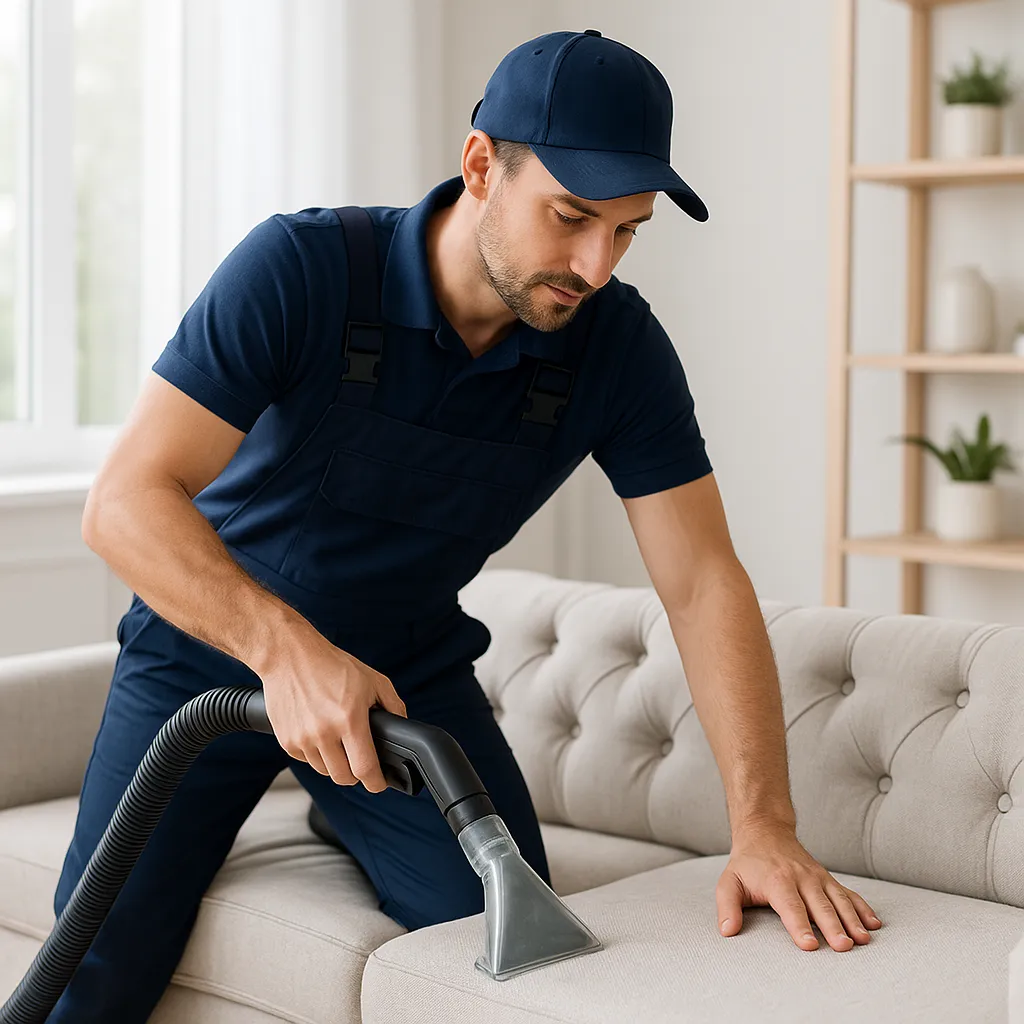
How to Clean Furniture: The Professional Guide
The Master Guide to Furniture Cleaning: How to Protect and Refresh Your Upholstery
Your furniture is more than just a place to sit; it’s one of the biggest investments in your home. However, between pets, kids, and daily use, upholstery acts as a magnet for dust, oils, and allergens.
Many homeowners jump straight into cleaning with whatever spray is under the sink, but this often leads to water stains or fiber damage. To help you maintain your home like a professional, we’ve outlined the essential steps to safely cleaning your furniture.
Sometimes, the best method is to call in a professional furniture cleaner who will know how to avoid damaging your fabrics.
1. The Most Important Step: Decode the Tag
Before a drop of water touches your couch or love seat, you must find the care tag (usually located under the seat cushions). Cleaning against the manufacturer's recommendation can ruin the fabric.
W (Water-based): You can use water or water-based upholstery cleaners.
S (Solvent-based): Use only dry-cleaning solvents. Water will leave a permanent "ring" or stain.
WS: You can use either water-based or solvent-based cleaners.
X: Vacuum only. No liquids. These pieces usually require professional-grade dry extraction.
2. The Professional Pre-Clean Routine
Most people start with the stain, but the pros start with the "dry soil."
High-Power Vacuuming: Use an upholstery attachment to get deep into the crevices of your sectionals and chairs. Removing dry dust prevents it from turning into "mud" when you apply a liquid cleaner.
The Brush Technique: Use a soft horsehair brush to loosen embedded pet hair and dander before vacuuming.
Professional furniture cleaners utilize professional techniques for stain extraction.
3. How to Safely Clean Stains and Spills
If your tag says "W" or "WS", you can tackle most common spots with a simple, pH-balanced solution:
Mix: 1 teaspoon of clear dish soap with 1 cup of warm water.
Blot: Never rub. Rubbing breaks down the fibers of your furniture and pushes the stain deeper into the foam.
Rinse: Use a separate cloth dampened with plain water to "rinse" the soap out. Residual soap acts as a magnet for future dirt.
4. Maintaining the "New" Look
Cleaning shouldn't only happen when there is an accident. To keep your stairs, rugs, and furniture looking fresh, follow these maintenance tips:
Rotate Cushions: This ensures even wear and prevents the foam from breaking down in one specific spot.
Weekly Dusting: Even if you don't see it, dust is abrasive. Every time you sit down, that dust acts like sandpaper on the fabric fibers.
Check Your Rugs: Often, the dirt on your furniture comes from your floors. Keeping your area rug clean prevents dust from being kicked up and settling onto your upholstery.
5. When DIY Reaches Its Limit
There comes a point where home remedies can't reach the deep-seated allergens and oils trapped inside the foam of your furniture. If you notice a lingering odor or if the colors of your sectional look dull, it may be time for a deep extraction.
Professional furniture cleaning uses specialized heat and suction to remove what a home vacuum simply can't reach. This doesn't just make the piece look better; it significantly improves the indoor air quality of your home.

