How to Remove Furniture Odor | Dustrixi Cleaning
Beyond the Spray: The Definitive Guide to Removing Odors from Your Furniture
There is nothing quite like the frustration of a beautiful living room that looks clean but doesn't smell clean. Because upholstery fibers are porous, they act like giant filters for your home—trapping pet dander, cooking oils, smoke, and moisture.
If you’re tired of masking smells with floral-scented aerosols, this guide is for you. We’re diving into the science of odor neutralization to help you reclaim your home’s freshness.
If these methods don't work, it might time to call in a professional furniture & upholstery cleaner.
1. Identify the Source (The Science of Smell)
Before you clean, you must understand what you’re fighting. Odors aren't just "scents"; they are microscopic particles trapped in the fabric weave or the foam cushions.
Bacteria-Based: Often from sweat or skin oils on headrests and armrests.
Protein-Based: Usually pet accidents or food spills.
Chemical-Based: Smoke or "new furniture" off-gassing.
2. The Professional’s "Home Toolkit" for Odors
Before calling in a furniture cleaning specialist, try these authentic DIY methods that actually work on a molecular level:
The Baking Soda "Dry Wash"
Baking soda is amphoteric, meaning it can react with both acidic and alkaline odor molecules.
Vacuum First: Remove the loose dust that holds odors.
Apply Heavily: Sift a generous layer of baking soda over the entire piece of furniture.
Agitate: Use a soft-bristled brush to lightly work it into the fibers.
Wait: Leave it for at least 4 to 6 hours (overnight is best).
Extract: Vacuum thoroughly using a HEPA-filter vacuum.
The Enzyme Secret
For pet odors, standard cleaners won't work because they don't break down uric acid. Look for a high-quality enzymatic cleaner. These "eat" the organic matter causing the smell. Pro Tip: Never use ammonia to clean pet spots; its scent actually encourages pets to "re-mark" the area.
3. Don't Forget the "Hidden" Odor Traps
Sometimes the smell isn't in the fabric—it's underneath it.
The Floor Connection: Odors often drift downward. If your sofa smells, check the [area rug] underneath it. Dust and dander settle there, creating an "odor pocket" that rises every time you sit down.
The Cushions: If the foam cores have absorbed liquid, surface cleaning won't help. You may need to take the covers off (if the tag allows) and treat the foam separately with a vinegar-water mist.
Sometimes, the best time method is to call in a professional furniture cleaner.
4. Fresh Air and Sunlight (Nature’s Deodorizers)
If it's a dry day, the UV rays from the sun act as a natural disinfectant. Moving a love seat or armchair into direct sunlight for a few hours can kill bacteria and help dissipate "musty" smells. Just be careful with delicate silks or dark velvets, as UV can cause fading.
5. When the Smell is "Set-In"
If you’ve tried the steps above and the scent returns after a few days, the odor has likely reached the "biological" stage deep within the padding. At this point, home remedies usually just provide temporary relief.
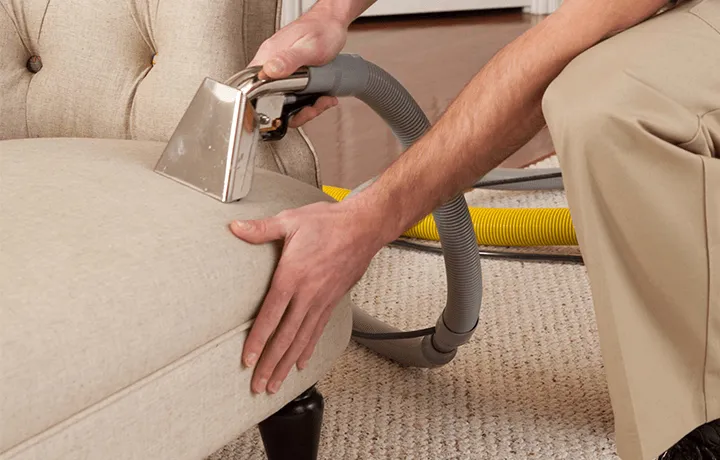
This is when professional upholstery cleaning becomes necessary. Pros use hot water extraction and specialized deodorizers that reach the internal layers of the furniture, flushing out the particles that a vacuum simply can't reach.

