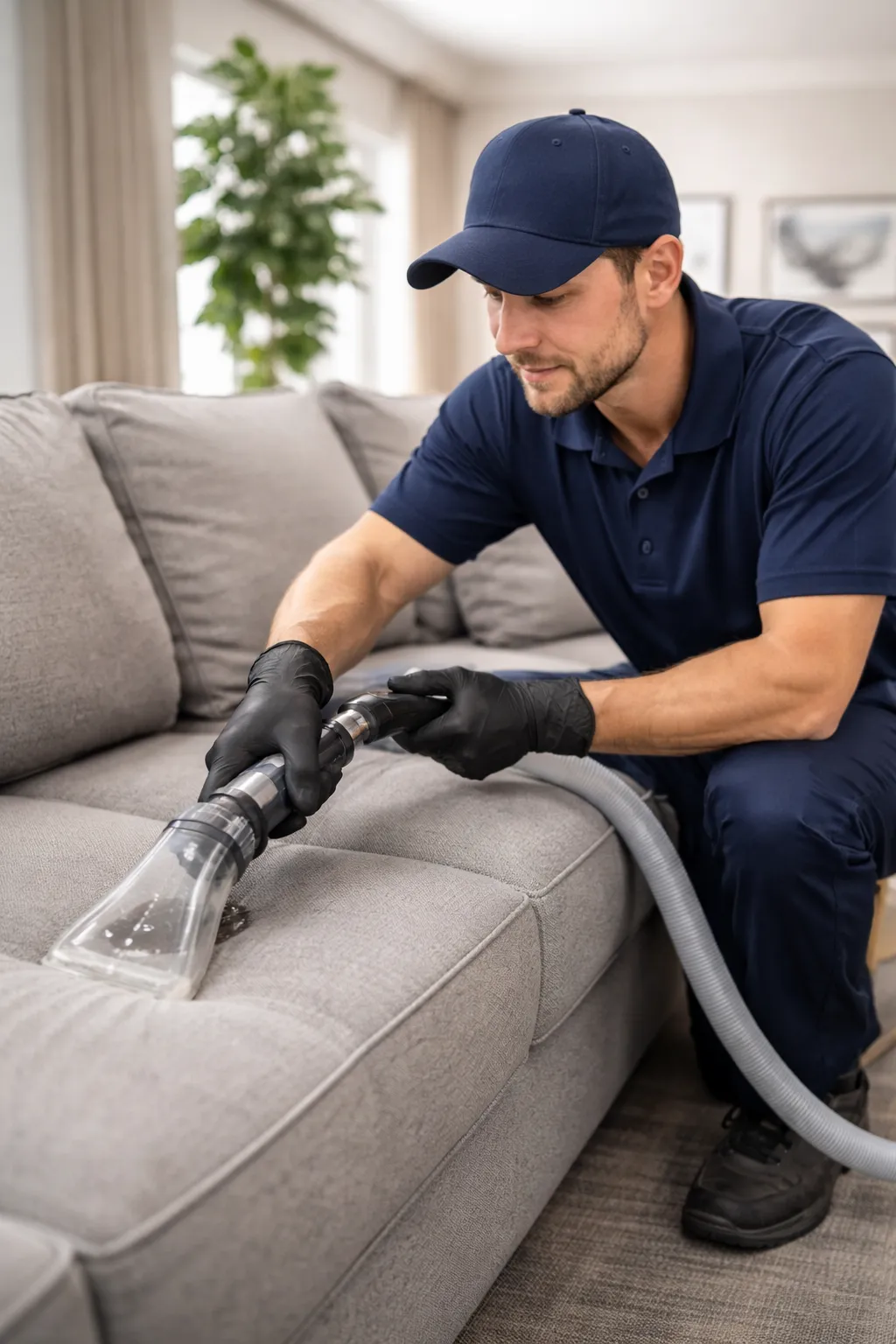
How to Remove Furniture Stains
Spilled? Don’t Panic: The Master Guide to Removing Stains from Every Surface
Finding a fresh spill on your favorite area rug or sofa can be a heart-sinking moment. While your first instinct might be to scrub vigorously, that’s often the quickest way to turn a temporary accident into a permanent eyesore.
To help you maintain a pristine home, we’ve compiled this expert guide on tackling the most common household stains. Our goal is simple: to give you the professional knowledge you need to protect your investment before you need to call in the pros.
We will also tell you when it might be time to look into professional furniture cleaning!
1. The Golden Rules of Stain Removal
Before you grab a cleaning spray, remember these three professional pillars:
Blot, Don’t Rub: Rubbing pushes the stain deeper into the fibers and can fray the material. Always use a clean, white microfiber cloth to blot from the outside in.
Test First: Always test any cleaning solution on an inconspicuous corner of your area rug or sofa.
Act Fast: The longer a stain sits, the more it chemically bonds with the fibers.
2. Area Rug Stain Removal: The Specialists' Approach
Area rugs are often the centerpiece of a room, but their dense fibers can trap liquids quickly. Because many area rugs are made of delicate wool or silk blends, they require a gentler touch than standard wall-to-wall carpet.
For Red Wine or Juice: Blot as much as possible. Mix a solution of 1 tablespoon liquid dish soap, 1 tablespoon white vinegar, and 2 cups of warm water. Apply sparingly and blot.
For Pet Accidents: Use an enzymatic cleaner specifically designed for rugs. This breaks down the proteins that cause odors.
Pro Tip: If the stain persists after two attempts, stop. Over-wetting can lead to "wicking," where the stain disappears and then reappears as it dries. This is a sign you need a deeper [area rug cleaning] to reach the base of the fibers.
3. Saving Your Furniture & Upholstery
Couches and sectionals take a beating. Whether it’s a coffee spill on the love seat or a mystery mark on the mattress, the "Cleaning Code" on your furniture tag is your best friend:
"W": You can use water-based cleaners.
"S": Use only water-free solvents (dry cleaning).
The "Salt Trick" for Grease: For fresh grease or oil stains on furniture cleaning projects, sprinkle salt or cornstarch on the spot and let it sit for 15 minutes to absorb the oil before vacuuming.
4. When DIY Isn't Enough
Authentic advice means knowing when a stain is a "DIY" job and when it’s a "Professional" job. If you are dealing with:
Old, set-in stains that have been through a heat cycle (like a sunny window).
Bleed-prone fabrics like certain Oriental rugs.
Large-scale spills that have soaked into the padding.
In these cases, DIY methods can sometimes do more harm than good. Routine maintenance via professional carpet cleaning and specialized furniture cleaning doesn't just remove spots; it extends the life of your home's most expensive assets by removing the abrasive grit that wears down fibers.

